A new training experience on WhatsApp
In a logic of large-scale dissemination of its training programs, Ovation wanted to leverage WhatsApp as a learning channel. The goal was to make access to content simpler, more direct, and more engaging, while providing an experience tailored to each learner's interactions.
To meet this need, OpenHub supported Ovation from the ideation phase to the production of a functional MVP. Several framing workshops helped identify pedagogical, technical, and usage constraints to design a solution consistent with the project's objectives.
An adaptive chatbot and a real-time tracking tool
The solution developed by OpenHub revolves around an adaptive logic WhatsApp chatbot. Based on the content provided by Ovation, including videos and PDF documents, the chatbot offers a training path that adjusts according to the learners' interactions.
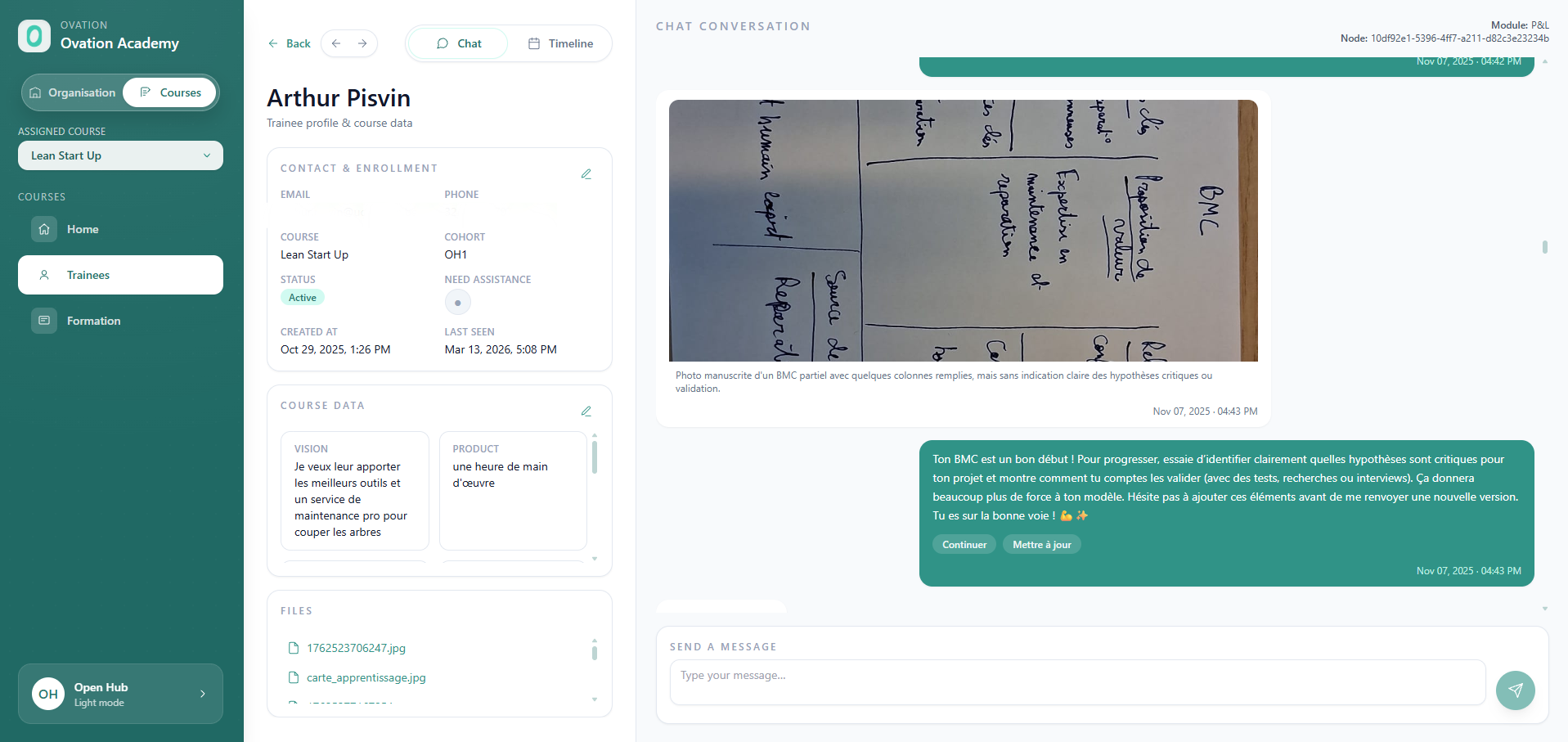
In parallel, OpenHub also designed a web application dedicated to Ovation's teams. This interface allows for real-time tracking of learners' progress, analyzing completion rates, time spent per module, and all conversational exchanges. The goal is to facilitate the management of training while providing better visibility on the user experience.
A promising first deployment
Deployed on an initial Ovation training, the solution has already been used by several dozen learners. This first deployment represents an important step in validating the concept and confirms the relevance of a conversational learning format on WhatsApp.
With this project, OpenHub illustrates its ability to design concrete digital solutions focused on user needs, and to support its partners from the initial framing to the development of a functional product. This first building block paves the way for future iterations and new perspectives for conversational learning.